- Introduction
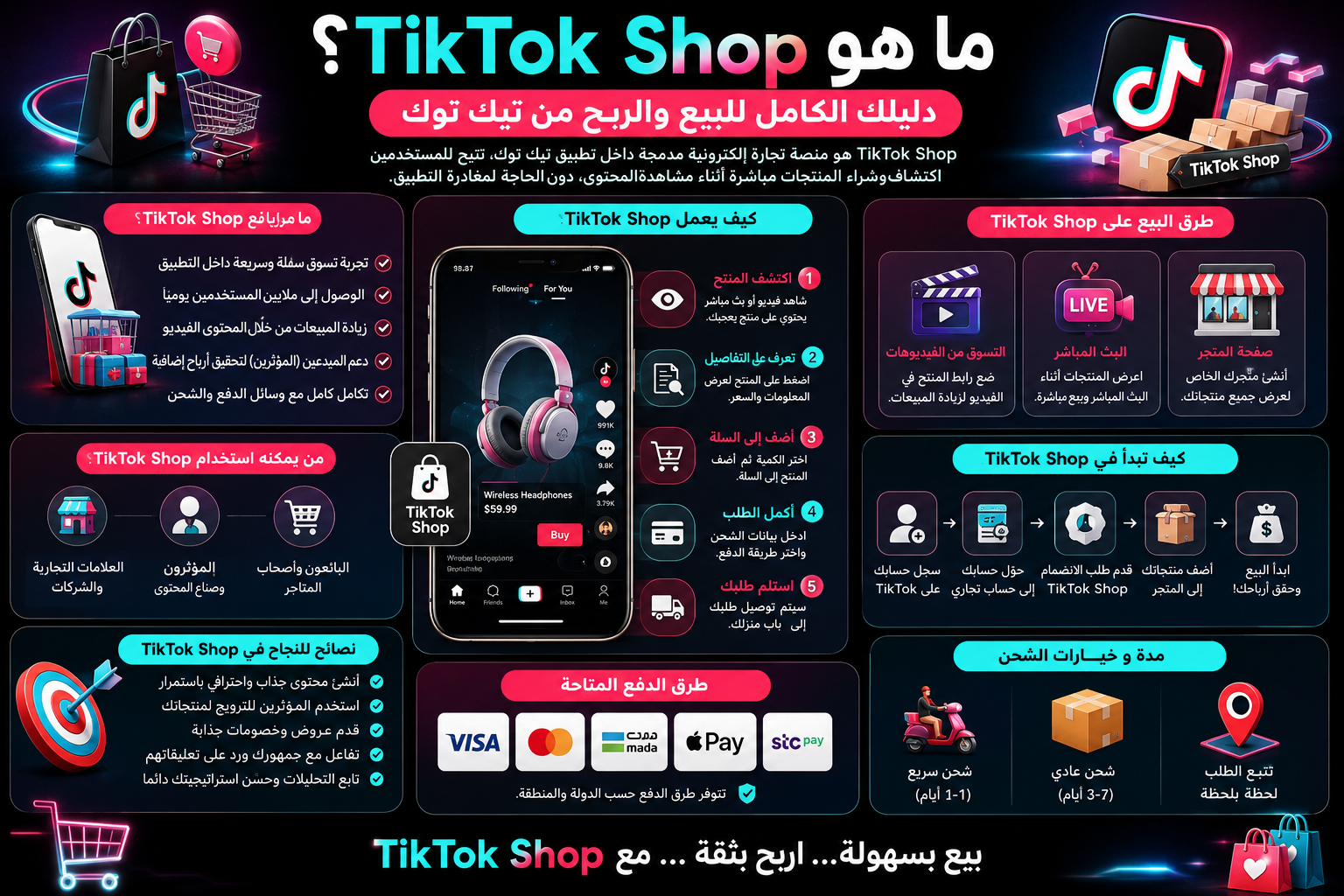
TikTok Shop has become one of the leading social commerce solutions, allowing users to discover and purchase products directly through TikTok, including in-feed videos, LIVE streams, and product display features. TikTok describes TikTok Shop as an end-to-end e-commerce solution that combines entertainment and shopping, enabling merchants to sell directly through TikTok.
By combining entertainment content with shopping, TikTok Shop provides brands, store owners, and creators with opportunities to reach shoppers in a more interactive way, along with tools that help sellers manage products and orders, analyze performance, and collaborate with creators.
In this guide, you will learn what TikTok Shop is, how it works, and its key advantages and disadvantages. You will also learn how to create a store, the different ways to sell, and the best practices that can help improve your store's performance and increase your chances of generating sales. The availability of TikTok Shop and its registration requirements vary depending on the target market, so it is important to check the requirements available in your country before getting started. TikTok's official Seller Center documentation confirms that availability and requirements vary by market.
If you are planning to use paid advertising to promote your products on TikTok Shop, it is important to understand key marketing metrics such as CPC, CPM, CTR, and ROAS, as they help you analyze campaign performance and make data-driven marketing decisions.
What Is TikTok Shop?
TikTok Shop is an e-commerce feature integrated into the TikTok app that allows businesses, brands, store owners, and creators to sell products directly to users without requiring them to leave the app. Instead of redirecting customers to an external website, users can browse products and complete their purchases and payments directly within TikTok.
TikTok Shop combines entertainment content with the shopping experience, allowing products to be showcased through short-form videos, Live Shopping, and store pages. This helps users discover products and purchase them in a fast and seamless way.
TikTok Shop is an effective tool for growing businesses, as it provides sellers with the ability to manage products and orders, collaborate with creators through the Affiliate Marketing program, and reach a large and engaged audience. As social commerce (Social Commerce) continues to grow, TikTok Shop has become an important platform for businesses looking to increase sales and strengthen their digital presence.
- If you do not have your own products, you may be able to generate income through the TikTok Shop Affiliate program. This program allows creators to promote sellers' products through shoppable videos and LIVE streams and earn a commission when sales are generated through their content. This model enables creators to monetize their TikTok audience without having to own products or manage inventory and shipping themselves, although the program's availability and eligibility requirements vary by market.
How Does TikTok Shop Work?
TikTok Shop works by integrating the shopping experience with content, allowing users to discover and interact with products while browsing TikTok. In markets where in-app purchasing is available, users can complete their purchases directly through TikTok without having to visit an external store.
The way TikTok Shop works is based on several key elements, including:
- Product Placement in Videos: Sellers can link products to shoppable content, allowing viewers to access product details while watching a video and learn more about the featured product.
- LIVE Shopping: TikTok Shop allows sellers and creators to showcase products during LIVE streams, interact with audiences, and answer questions in real time. Creators can also promote products through shoppable videos and LIVE streams.
- Dedicated Storefront: Eligible sellers can showcase their products through a dedicated storefront within TikTok, depending on the features available in their market.
- Order and Payment: In markets that support in-app purchasing, users can complete the ordering and payment process through the shopping experience within TikTok.
- Product and Order Management: Through TikTok Shop Seller Center, sellers can manage products and orders, track fulfillment and logistics operations, and manage various aspects of running their store.
Overall, TikTok Shop combines content, shopping, and marketing into a single experience, providing sellers and creators with tools to showcase products, promote them, engage with audiences, and support sales.
Why Has TikTok Shop Become Important for E-commerce?
TikTok Shop has become one of the leading social commerce solutions because it combines entertainment and shopping on a single platform, making product discovery and purchasing more convenient and seamless. In markets that support in-app purchasing, users can move from discovering a product to completing their purchase within TikTok, which can help reduce the number of steps between product discovery and checkout.
TikTok Shop also helps businesses and brands reach a large and engaged audience through short-form videos and LIVE streams, which allow products to be showcased and promoted within engaging content. Sellers can also collaborate with creators through Affiliate programs to promote products and reach new audiences, making TikTok Shop both a marketing and sales channel.
In addition, TikTok Shop provides tools for managing products and orders and analyzing sales performance, helping store owners optimize their strategies and make data-driven decisions. When using paid advertising, sellers can also leverage metrics such as CPC, CPM, CTR, and ROAS to analyze campaign performance and evaluate advertising spend efficiency.
Thanks to these advantages, TikTok Shop can be a suitable channel for small and medium-sized businesses and brands looking to integrate content with e-commerce and take advantage of the social commerce model.
Key Benefits of TikTok Shop
TikTok Shop offers a range of features that combine content and shopping, helping businesses, brands, and creators showcase products, promote them, and engage with audiences. Some of its key benefits include:
1. Seamless In-App Shopping Experience
In markets that support in-app purchasing, TikTok Shop allows users to discover products and complete the purchasing process through the shopping experience within TikTok, which can help reduce the number of steps between product discovery and checkout.
2. Access to a Large and Engaged Audience
TikTok Shop enables brands to showcase their products to TikTok's audience and benefit from the platform's content discovery-driven environment, where users can discover products while engaging with content.
3. Support for Product Discovery
TikTok uses recommendation and content discovery systems to show users content and products based on their interests and interactions with the platform. This gives brands opportunities to showcase their products as part of the content discovery experience.
4. Support for LIVE Shopping
Sellers and creators can showcase products during LIVE streams, interact with audiences, and answer questions in real time, creating a more interactive experience for presenting and promoting products.
5. Integration with Video Content
Products can be linked to shoppable content, allowing them to be showcased within videos and integrated into the content discovery experience, depending on the features available in each market.
6. Collaboration with Creators Through Affiliate Programs
TikTok Shop allows sellers to collaborate with creators through Affiliate programs to promote products, with creators earning a commission when they generate sales in accordance with the program's terms and conditions.
7. Store Management and Performance Analytics
TikTok Shop Seller Center provides tools that help sellers manage products and orders and monitor store performance, along with reports and metrics that help evaluate sales and campaign performance.
8. Support for Paid Advertising
Sellers can use TikTok Shop Ads to promote their products and track performance metrics such as CPC, CPM, CTR, and ROAS, along with other indicators such as product page views, product additions to cart, and purchases.
9. Integration of Content with the Shopping Experience
TikTok Shop allows products to be integrated into videos and LIVE streams, making them part of the content discovery and engagement experience. This integration can help brands present products in a context that is more closely connected to the content users are already watching.
10. Suitable for Businesses of Different Sizes
TikTok Shop can provide opportunities for businesses and brands of different sizes to showcase products, engage with audiences, and take advantage of social commerce tools, although eligibility requirements and available features vary by market.
Disadvantages of TikTok Shop
Despite the advantages offered by TikTok Shop, using the platform can also involve several challenges that sellers and store owners should consider when evaluating it as a sales channel.
1. Availability Is Limited to Certain Countries
TikTok Shop is not available in every market, and features and eligibility requirements may vary from one country to another. This means that a seller's ability to use the platform depends on the target market and its specific requirements.
2. Competition for Users' Attention
TikTok Shop operates within a highly content-driven environment, so sellers need to create content capable of capturing users' attention amid a large volume of competing content and products.
3. Dependence on Content Quality
Content quality plays an important role in presenting products on TikTok Shop, particularly when relying on short-form videos and LIVE streams. As a result, sellers may need to invest time and resources in creating content that suits the platform and its audience.
4. Frequent Policy and Seller Requirement Updates
TikTok Shop policies, seller requirements, and available features may change over time. Sellers therefore need to monitor updates and adapt accordingly to maintain their ability to operate on the platform. Seller Center also provides resources for keeping track of policy updates.
5. Costs of Promotion and Paid Advertising
Increasing product visibility may require the use of paid advertising tools. Campaign costs and results can vary depending on campaign objectives, target audience, competition, and budget management. Sellers therefore need to monitor advertising performance and spending regularly.
6. Order Fulfillment, Shipping, and Returns Challenges
Sellers need to manage inventory, order fulfillment, shipping, and returns according to the requirements and policies applicable in their market. These operations can become more complex as order volumes increase.
7. The Need to Build Credibility
New stores may need time to establish credibility with customers by providing accurate product information, maintaining service quality, and paying attention to the overall post-purchase experience.
8. The Need for Consistent Content Production
Making effective use of TikTok Shop often involves leveraging content formats such as short-form videos and LIVE streams. Producing content consistently requires time and resources, which can be challenging for small businesses with limited teams or budgets.
9. Competition on Price and Value
Sellers may face competition from other stores offering similar products. Providing clear value through competitive pricing, product quality, attractive offers, or a better customer experience can therefore be important for maintaining competitiveness.
10. Risks of Relying on a Single Sales Channel
Relying entirely on TikTok Shop as the only sales channel can increase a business's exposure to changes in platform policies, seller requirements, or available features. For this reason, businesses should consider diversifying their sales and marketing channels rather than depending on a single platform.
Who Can Sell on TikTok Shop?
TikTok Shop provides opportunities for different types of individuals and businesses to sell products directly through the platform, making it suitable for businesses of various sizes. Some of the main groups that may be eligible to sell on TikTok Shop include:
1. E-commerce Store Owners
E-commerce store owners can use TikTok Shop to showcase their products and reach new customers, while managing products, orders, and sales through the platform.
2. Brands
Brands can establish a presence on TikTok Shop to showcase their products, increase brand awareness, and drive sales through content and advertising.
3. Small and Medium-Sized Businesses
TikTok Shop can be an attractive option for small and medium-sized businesses looking to expand their customer base and sell products through social commerce without relying solely on a traditional standalone online store.
4. Creators and Influencers
Creators and influencers can promote their own products or promote products from other sellers through Affiliate Marketing, earning a commission when eligible sales are generated through their content. However, participating as an affiliate creator is different from registering as a TikTok Shop seller, and eligibility and availability vary by market.
5. Manufacturers and Suppliers
Eligible manufacturers and suppliers can use TikTok Shop to sell their products directly to consumers or collaborate with brands and sellers to expand product reach, subject to the requirements applicable to their market.
6. Authorized Distributors and Resellers
Authorized distributors and resellers may be able to sell products from the brands they represent, provided they meet TikTok Shop's requirements and submit the necessary documentation demonstrating their authorization or eligibility to sell the products.
Basic Requirements for Selling on TikTok Shop
Although the groups above may be eligible to participate in TikTok Shop, sellers must meet the applicable requirements for their market. These may include having an eligible account, complying with TikTok Shop policies, and providing the required documents to verify their identity or business registration.
Important: Eligibility, documentation requirements, seller types, and available TikTok Shop features can vary by country and market. Sellers should therefore check the latest requirements in the relevant TikTok Shop Seller Center before registering.
Requirements for Creating a TikTok Shop
To create a TikTok Shop, sellers must meet a set of requirements that may vary depending on the country or market where they plan to sell. However, there are several common requirements that apply to many supported markets, including the following:
1. Create a TikTok Shop Seller Center Account
You need to register through TikTok Shop Seller Center using a TikTok account or a valid email address and phone number. The exact registration process may vary depending on the market.
2. Be Eligible to Sell in a Supported Market
TikTok Shop is not available in every country. Sellers must meet the eligibility requirements for the market they select when registering. In some markets, TikTok requires sellers to reside in the country selected for their shop.
3. Verify Your Identity or Business
Sellers must provide the required documents to verify their identity or business eligibility. Individual sellers may be required to provide a government-issued identification document, while registered businesses may need to provide documents such as a business license or registration documents, depending on the market.
4. Provide Banking Information
Sellers need to provide valid banking information so that payments from sales can be received. TikTok may also require the bank account name to match the registered seller or business name, depending on the market and business type.
5. Provide Valid Contact Information
A valid phone number and email address are required during registration. TikTok's current seller registration requirements also state that the phone number or email address must not already be used for another TikTok Shop.
6. Comply with TikTok Shop Policies
All sellers must comply with the applicable TikTok Shop policies and requirements, including rules related to products, intellectual property, shipping, returns, customer service, and other aspects of store operations. Failure to comply may result in restrictions or other enforcement actions.
7. Sell Eligible Products
TikTok Shop does not allow every type of product to be sold on the platform. Certain products may be prohibited or restricted depending on the market and applicable policies. Sellers should therefore verify that their products are eligible before listing them for sale.
Important Note
Requirements such as the documents needed, seller eligibility, business type, residency requirements, and available features may vary depending on the country or market. TikTok also updates its Seller Center requirements and policies from time to time.
Therefore, sellers should always check the latest requirements for their target market through the official TikTok Shop Seller Center before starting the registration process. TikTok's official setup guide currently lists market availability and the required business, identity, banking, and contact information for setting up a shop.
How to Create a TikTok Shop Step by StepIf you want to start selling through TikTok Shop, you can set up your store by completing the registration, verification, store setup, and payment steps. Once your account and required information have been approved, you can add products and start selling, subject to the requirements and features available in your market.
Step 1: Access TikTok Shop Seller Center
Go to TikTok Shop Seller Center and sign up or log in using your TikTok account, or register with a valid email address and phone number, depending on the options available in your market.
Step 2: Select Your Country and Business Type
Select the country where you are eligible to operate your TikTok Shop. Then choose the applicable business type, such as a registered business or an individual seller operating under their personal name. The available options may vary by market.
Step 3: Enter Your Account and Business Information
Provide the required information, which may include:
- Full name or legal business name.
- Email address.
- Phone number.
- Business or tax identification information, where applicable.
- Other information required for verification.
The exact information required depends on the market and business type.
Step 4: Verify Your Identity or Business
Upload the required documents to verify your identity or business eligibility. Individual sellers may be asked to provide a government-issued ID, while registered businesses may need to provide documents such as a business license or registration documents. After submitting the documents, TikTok will review the information.
Step 5: Set Up Your Warehouse and Return Addresses
Provide the required warehouse or pickup address for your store, including the country or region, street address, contact person, postal code, and phone number.
You will also need to provide a return address for your store. Depending on your setup, you may be able to use your warehouse or pickup address as the return address.
Step 6: Add Your Banking Information
After your business documents have been verified, link a valid bank account to your TikTok Shop so you can receive payouts from your sales.
TikTok may require the bank account name to match the registered seller or business name, depending on the business type and market.
Step 7: Set Up Your Store
Once the required registration and verification steps are completed, set up your store by adding the necessary store information, such as:
- Store name.
- Store details and business information.
- Official TikTok account, where applicable.
TikTok allows eligible sellers to link an official TikTok account to their shop so they can create content that promotes their products and drives traffic to the store.
Step 8: Add Your Products
Start listing your products by adding information such as:
- Product title.
- Product description.
- Category.
- Price.
- Product images or videos.
- Available inventory.
- Variations such as size or color, where applicable.
TikTok Shop also provides options for adding products individually or in bulk, depending on the market and available tools.
Step 9: Set Up Shipping, Returns, and Refunds
Configure the shipping options available for your store and make sure your fulfillment, returns, and refund settings comply with the requirements applicable to your market.
TikTok's Seller Center provides tools for managing shipping and returns as part of the store setup process.
Step 10: Review Your Store and Start Selling
Review your store information, products, shipping settings, and other details to ensure that everything is accurate and complies with TikTok Shop policies.
Once your setup is complete and your account has been approved, you can start selling and reach customers through TikTok videos, LIVE streams, and creator partnerships, depending on the features available in your market.
Step 11: Promote Your Products
After your store is ready, you can promote your products through:
- Short-form TikTok videos.
- LIVE Shopping.
- Creator and affiliate partnerships.
- TikTok Shop Ads and other available advertising solutions.
These methods can help increase product visibility, reach new audiences, and support sales growth.
Tip: After setting up your store, monitor your sales and advertising performance regularly. Track metrics such as CTR, CPC, and ROAS to evaluate campaign performance and identify opportunities for improvement.
Want to learn more about setting up a TikTok Shop, seller requirements, store management, product listings, and best practices? You can refer to TikTok's official resources, including:
How to Add Products to TikTok Shop
After setting up your TikTok Shop and completing the required approval and verification steps, you can start adding products and making them available for sale. TikTok Shop Seller Center provides tools for creating product listings, including options for adding products individually or in bulk, depending on the market and available features.
Step 1: Log In to TikTok Shop Seller Center
Log in to your TikTok Shop Seller Center account and go to the main dashboard.
Step 2: Go to the Products Section
From the navigation menu, select Products and choose the option to add a new product listing.
Step 3: Enter Product Information
Enter the required product details, which may include:
- Product name.
- Product category.
- Brand name, if applicable.
- Product description highlighting its key features and specifications.
- High-quality product images and, where supported, product videos.
Make sure the information accurately represents the product and complies with TikTok Shop's product listing requirements.
Step 4: Set the Price and Inventory
Enter the product price and available inventory. If the product has variations, such as different sizes, colors, or styles, add the relevant variations and their corresponding inventory and pricing information.
Step 5: Add Shipping and Fulfillment Information
Provide the required shipping and fulfillment information, such as product weight, dimensions, shipping settings, and the applicable fulfillment method. The available options may vary depending on your market and shipping setup.
Step 6: Review the Product Listing
Before submitting the product, carefully review the title, description, images, price, inventory, variations, and shipping information. Make sure the listing is accurate and complies with TikTok Shop's product and content policies.
Step 7: Submit the Product for Review
Once you have completed the listing, submit the product through the available option in Seller Center. TikTok may review the listing before it becomes available for sale. The exact review and publishing process can vary by market and product category.
Tips for Creating Professional Product Listings
- Use clear, high-resolution product images.
- Write a concise and descriptive product title.
- Include relevant keywords naturally in the product title and description.
- Clearly explain the product's features, specifications, and benefits.
- Keep prices and inventory information up to date.
- Add accurate product variations, such as size and color, where applicable.
- Make sure all product information complies with TikTok Shop policies.
- Avoid misleading claims or inaccurate product information that could result in the listing being rejected or removed.
Ways to Sell on TikTok Shop
TikTok Shop offers several ways for sellers, brands, and creators to showcase and promote products, giving them flexibility in reaching customers and supporting sales. Businesses can combine multiple methods depending on their products, audience, and market.
1. Selling Through Short-Form Videos (Shoppable Videos)
Sellers can feature products in shoppable videos, allowing users to discover the products while watching content and access product information directly from the video. In markets that support in-app purchasing, users may also be able to complete their purchase through TikTok.
2. Selling Through LIVE Shopping
LIVE Shopping allows sellers and creators to showcase products during LIVE streams, interact with audiences, answer questions in real time, and highlight promotions or special offers. This interactive format can help encourage immediate purchase decisions.
3. Selling Through the Storefront
Eligible sellers can showcase their products through a dedicated storefront within TikTok, where customers can browse available products and access product information. The storefront experience and available features may vary depending on the market.
4. Affiliate Marketing
Sellers can collaborate with creators through TikTok Shop Affiliate programs to promote their products. Creators can feature products in their content and earn a commission when eligible sales are generated through their promotional efforts, subject to the applicable program terms.
5. Promoting Products Through TikTok Ads
Sellers can use TikTok's advertising solutions to promote their products and reach relevant audiences. Paid advertising can help increase product visibility and support sales when campaigns are properly targeted and optimized.
6. Using Promotions and Discounts
Sellers can use available promotional tools, such as discounts, coupons, limited-time offers, and special deals, to attract customers and encourage purchases. The specific promotional features available may vary by market.
7. Leveraging User-Generated Content (UGC)
Brands can benefit from User-Generated Content (UGC) such as customer reviews, unboxing videos, product demonstrations, and user experiences. This type of content can help build trust, provide social proof, and support customers' purchase decisions.
How to Increase Sales on TikTok Shop
TikTok Shop can help businesses generate strong sales when used strategically. Success does not depend on simply listing products; it also requires engaging content, audience interaction, effective product presentation, and the proper use of the platform's marketing tools. Here are some effective ways to increase sales on TikTok Shop:
1. Create Engaging, High-Quality Content
Publish short-form videos that showcase your products in creative and informative ways. Focus on solving a customer problem, demonstrating how the product works, or clearly highlighting its key benefits.
2. Take Advantage of LIVE Shopping
Use LIVE Shopping to showcase products, answer customers' questions in real time, demonstrate how products work, and highlight special offers during the LIVE stream. This interactive format can help encourage purchase decisions.
3. Collaborate with Creators and Influencers
Working with relevant creators can help your products reach new audiences and build customer trust, especially when creators provide authentic product demonstrations, reviews, or experiences.
4. Use TikTok Ads
Create targeted advertising campaigns to increase product visibility and reach relevant potential customers. Monitor campaign performance and optimize your targeting and budget based on the results.
5. Optimize Your Product Listings
Use professional product images, clear titles, and detailed descriptions that naturally include relevant keywords. Clearly explain the product's features, specifications, and benefits to help customers make informed purchasing decisions.
6. Offer Promotions and Discounts
Use available promotional tools such as discount coupons, limited-time offers, special deals, or free-shipping promotions to encourage customers to complete their purchases.
7. Encourage Customer Reviews
Encourage customers to share honest reviews and experiences with your products. Positive customer feedback can provide social proof, increase credibility, and help potential buyers make purchasing decisions.
8. Leverage User-Generated Content (UGC)
Encourage customers and creators to share videos and photos featuring your products. User-Generated Content (UGC) can help build trust, demonstrate real-world product experiences, and support higher conversion rates.
9. Monitor and Analyze Performance
Regularly monitor your store and advertising performance using relevant metrics such as CTR, CPC, and ROAS. Use these insights to identify what is working, optimize your campaigns, and improve your overall sales strategy.
10. Take Advantage of Relevant Trends
Keep track of relevant TikTok trends, sounds, hashtags, and challenges, and incorporate them into your content when they fit your brand and target audience. Using relevant trends can increase content discovery and help your products reach a wider audience.
Common Mistakes to Avoid on TikTok Shop
When selling through TikTok Shop, many sellers make mistakes that can negatively affect sales and overall store performance. Avoiding these common mistakes can help sellers improve their strategy, provide a better customer experience, and increase their chances of success.
1. Relying Only on Product Listings
One of the most common mistakes is simply uploading products without creating engaging content. Since TikTok is primarily a content-driven platform, sellers should use short-form videos and LIVE Shopping to showcase products and engage with potential customers.
2. Using Low-Quality Images and Videos
Using unclear product images or poorly produced videos can reduce customer trust and negatively influence purchasing decisions. High-quality visuals are important for presenting products effectively.
3. Failing to Optimize Product Descriptions
A vague or incomplete product description can make it harder for customers to understand the product and may limit its discoverability. Use clear, accurate descriptions that naturally include relevant keywords.
4. Ignoring Performance Analytics
Failing to monitor performance metrics such as CTR, CPC, and ROAS makes it difficult to determine which strategies are working and which areas need improvement.
5. Not Taking Advantage of LIVE Shopping
Ignoring LIVE Shopping means missing an opportunity to demonstrate products, interact with customers in real time, answer questions, and highlight promotions.
6. Using Paid Advertising Ineffectively
Running paid campaigns without appropriate targeting, testing, or optimization can lead to inefficient use of the advertising budget. Sellers should regularly monitor campaign performance and adjust their strategies based on data.
7. Ignoring Creator and Influencer Partnerships
Not taking advantage of creator partnerships can limit opportunities to reach new audiences. Working with relevant creators through available TikTok Shop programs can help increase product visibility and generate sales.
8. Neglecting Customer Service
Slow responses, unclear communication, or unprofessional customer service can negatively affect the customer experience and potentially impact reviews and store reputation.
9. Setting Uncompetitive Prices
Prices that are significantly higher than comparable products may discourage customers from purchasing. Sellers should consider competitors, product quality, promotions, shipping costs, and the overall value offered when setting prices.
10. Failing to Follow Relevant Trends
Ignoring relevant TikTok trends, such as popular sounds, formats, and challenges, can reduce opportunities for content discovery and audience reach. However, trends should only be used when they are appropriate for the brand, product, and target audience.
Best Tools for Managing and Analyzing TikTok Shop Performance
To succeed on TikTok Shop, simply adding products and publishing content is not enough. Sellers also need tools that help them manage their stores, analyze performance, understand customer behavior, and make data-driven decisions. These tools can help improve operational efficiency, optimize marketing activities, and support sales growth.
1. TikTok Shop Seller Center
TikTok Shop Seller Center is the primary platform for managing a TikTok Shop. Depending on the market and available features, it can help sellers with:
- Managing products and inventory.
- Tracking orders and sales.
- Monitoring store performance.
- Managing returns and fulfillment.
- Accessing relevant store and sales reports.
2. TikTok Ads Manager
TikTok Ads Manager is used to create and manage paid advertising campaigns on TikTok. It can help sellers:
- Create targeted advertising campaigns.
- Monitor and analyze campaign performance.
- Optimize campaigns based on results.
- Track metrics such as CPC, CPM, CTR, and ROAS.
3. TikTok Analytics
TikTok's analytics tools provide insights into content and audience performance. Depending on the account and available features, sellers and creators can analyze metrics such as:
- Video views.
- Engagement.
- Audience and traffic insights.
- Content performance.
- Performance of content promoting products.
4. Google Analytics
If a business also operates an external website or online store, Google Analytics can help analyze activity on that website, including:
- Website traffic.
- Traffic sources.
- Visitor behavior.
- Conversions and sales attributed to the website.
Important: Google Analytics should not be presented as a tool that directly tracks all TikTok Shop in-app purchases. Its main role is analyzing traffic and conversions on websites or external properties where it is properly implemented.
5. Influencer Marketing Tools
Influencer marketing platforms and tools can help businesses manage creator collaborations more efficiently. Depending on the tool, they may provide features for:
- Finding relevant creators.
- Managing influencer campaigns.
- Tracking campaign performance.
- Measuring the results of creator collaborations.
6. Content Creation Tools
Video and graphic design tools can help sellers create engaging content for TikTok. They can be used to:
- Produce short-form videos.
- Edit product demonstrations and promotional content.
- Create product visuals and graphics.
- Improve the overall quality and consistency of content.
7. Inventory and Shipping Management Tools
Inventory and fulfillment tools can become increasingly important as order volumes grow. They can help businesses:
- Track inventory levels.
- Manage orders and fulfillment.
- Coordinate shipping operations.
- Reduce manual errors and improve operational efficiency.
The Difference Between TikTok Shop and Online Stores
Many people confuse TikTok Shop with traditional online stores. However, there are clear differences between the two in terms of how they operate, attract customers, market products, and deliver the shopping experience.
1. Platform and Business Model
TikTok Shop:
Operates within the TikTok ecosystem, allowing users in supported markets to discover products through TikTok content and, where in-app checkout is available, complete purchases through TikTok.
Online Stores:
Platforms such as Shopify and WooCommerce typically operate as independent websites or online storefronts that customers access separately.
2. Customer Acquisition
TikTok Shop:
Relies heavily on short-form videos, LIVE Shopping, creators, and content discovery to attract potential customers.
Online Stores:
Can rely on various channels, including paid advertising, Search Engine Optimization (SEO), social media, email marketing, referrals, and direct traffic.
3. Customer Experience
TikTok Shop:
Combines product discovery with entertainment and content. In markets that support in-app purchasing, customers can move from discovering a product to completing a purchase through TikTok.
Online Stores:
Usually provide a more traditional shopping journey, where customers visit the website, search or browse for products, review product information, and complete the checkout process.
4. Marketing
TikTok Shop:
Focuses heavily on short-form content, creators, LIVE Shopping, trends, and TikTok advertising.
Online Stores:
Can use a broader range of marketing strategies, such as SEO, Google Ads, email marketing, social media advertising, affiliate marketing, and content marketing.
5. Audience Reach
TikTok Shop:
Can benefit from TikTok's recommendation and content discovery systems, providing opportunities to reach users who may not already be familiar with a brand.
Online Stores:
Usually require businesses to actively generate traffic through SEO, advertising, social media, partnerships, email marketing, or other acquisition channels.
6. Brand Control
TikTok Shop:
Provides relatively limited control over the overall shopping environment because it operates within TikTok's ecosystem and is subject to its policies, features, and requirements.
Online Stores:
Generally provide greater control over website design, branding, customer experience, integrations, and other aspects of the shopping journey.
7. Analytics and Tools
TikTok Shop:
Provides sellers with management and performance tools through TikTok Shop Seller Center, depending on the market and available features.
The Difference Between TikTok Shop, Instagram Shop, and Facebook Shop
TikTok Shop, Instagram Shop, and Facebook Shop are all associated with social commerce, but each platform offers a different approach to product discovery, content, audience engagement, and selling. It is also important to note that the exact shopping features and checkout options available can vary by country and may change over time.
1. TikTok Shop
- Relies heavily on entertaining content and short-form videos.
- Products can be promoted through shoppable videos and LIVE Shopping, where available.
- Strongly connected to content discovery and creator-led product promotion.
- Particularly suitable for visually demonstrable products such as fashion, beauty, accessories, and lifestyle products.
- TikTok's recommendation system can help content and products reach users beyond an existing follower base.
2. Instagram Shopping
- Combines high-quality visual content, Reels, and product-focused content.
- Particularly suitable for brands that place strong emphasis on visual identity and branding.
- Helps businesses showcase products within their broader Instagram presence and build relationships with followers.
- Shopping features can allow users to discover products through eligible content and shopping surfaces, depending on the market.
- Can be effective for brands focused on visual presentation and long-term audience engagement.
3. Facebook Shops
- Integrates commerce with Facebook Pages, communities, content, and advertising, depending on the available features.
- Can help businesses reach broad and diverse audiences through Facebook's ecosystem.
- Particularly useful for businesses that already have an established Facebook presence or rely heavily on paid advertising and community engagement.
- Compared with TikTok, Facebook is generally less centered on short-form entertainment content as the primary product-discovery mechanism.
Quick Comparison
Platform Main Selling & Discovery Methods Content Style Key Strength TikTok Shop Shoppable videos + LIVE Shopping + creators Short-form, entertaining, trend-driven Product discovery and content-driven reach Instagram Shopping Visual content + Reels + shopping features Visual and brand-focused Branding and visual product presentation Facebook Shops Pages + communities + content + advertising Informational and social Broad audience reach and advertisingIs TikTok Shop Suitable for All Types of Businesses?
Not necessarily. TikTok Shop is not equally suitable for every type of business, but it can be a strong sales channel for certain industries and product categories. Its effectiveness depends on factors such as the product itself, the target audience, the purchasing journey, and the brand's ability to create engaging content.
Businesses That May Be Well-Suited to TikTok Shop
1. Fashion and Apparel Products
Products such as clothing, shoes, and accessories can work well on TikTok because they are highly visual and can be demonstrated or styled effectively through short-form videos.
2. Beauty and Skincare Products
Beauty and skincare products can benefit from demonstrations, tutorials, product routines, and creator reviews. However, sellers should ensure that all product claims and promotional content comply with TikTok Shop's applicable policies.
3. Fast-Moving Consumer Products
Simple household products, everyday accessories, lifestyle products, and trending items can be suitable for TikTok Shop, particularly when their benefits can be demonstrated quickly.
4. Products That Can Be Demonstrated
Generally, products that can be shown, tested, demonstrated, or explained effectively in a short video may have an advantage on a content-driven platform such as TikTok.
Businesses That May Be Less Suitable
1. Highly Complex or Technical Products
Advanced software, industrial equipment, and other highly technical products may require detailed explanations, demonstrations, consultations, or longer sales processes that are less suited to short-form content.
2. Products and Services With Long Purchase Cycles
Products or services that require significant research, multiple consultations, or lengthy decision-making processes may be less suited to impulse-oriented social commerce.
Examples can include:
- Real estate.
- Large industrial solutions.
- High-value professional services.
3. Products With Limited Visual Appeal
If a product is difficult to demonstrate visually or its value cannot be communicated effectively through short-form content, TikTok may be less effective as a primary sales channel.
Why Isn't TikTok Shop Suitable for Everyone?
TikTok Shop is closely connected to TikTok's content-driven environment, where businesses can benefit from:
- Short-form visual content.
- Product demonstrations.
- Creator partnerships.
- LIVE Shopping.
- Content discovery and recommendations.
- Real-time audience interaction.
This means products that can capture attention quickly and communicate their value within a short amount of time may have a natural advantage.
However, this does not mean that only low-cost or impulse-purchase products can succeed. Businesses selling more complex products can also use TikTok for awareness, education, demonstrations, and lead generation, depending on their strategy and the features available in their market.
Gravity Marketing’s Collaboration with TikTok Shop
Since its establishment in 2019, Gravity Marketing has participated in numerous marketing campaigns over the years. One of its most notable achievements was its collaboration with TikTok Shop, which began in 2022 and continued through 2024. This collaboration represented an important strategic opportunity that contributed to enhancing Gravity Marketing’s expertise and expanding its scope of operations. It also marked a significant milestone in the company’s development and supported its commitment to continuous growth and development.
At the end of this article, we will highlight the key achievements of Gravity Marketing throughout its journey with TikTok Shop, along with the key milestones that have shaped this collaboration.
- TikTok Shop Events


- TikTok Appreciation Plaque


Official Article
A published article documenting aspects of the collaboration and achievements resulting from working with TikTok.
Article Link:
(Tik ToK)
Conclusion
In conclusion, TikTok Shop has become one of the most important modern e-commerce tools, bringing entertainment and shopping together on a single platform. It enables businesses and content creators to reach a wide audience quickly and increase sales through short-form videos, live streaming, and influencer marketing.
However, success on TikTok Shop does not depend solely on creating a store and uploading products. It requires a clear strategy based on creating engaging content, understanding the target audience, and using analytics and advertising tools effectively.
TikTok Shop may not be suitable for every type of business, but it can be a particularly strong option for visual and fast-moving consumer products that rely on capturing users’ attention within seconds.
In this context, Gravity Marketing’s experience with TikTok Shop represents one of the notable milestones in the company’s journey. The collaboration between the two parties began in 2022 and continued through 2024. This collaboration represented a strategic opportunity that contributed to enhancing the company’s expertise and expanding its scope of operations, in addition to its participation in a number of campaigns and projects related to the platform.
Therefore, when used effectively, TikTok Shop can be a powerful channel for driving growth, increasing sales, and building a strong brand in the e-commerce landscape. The collaboration between Gravity Marketing and TikTok Shop also highlights the importance of leveraging the platform and making effective use of its capabilities to achieve better results.