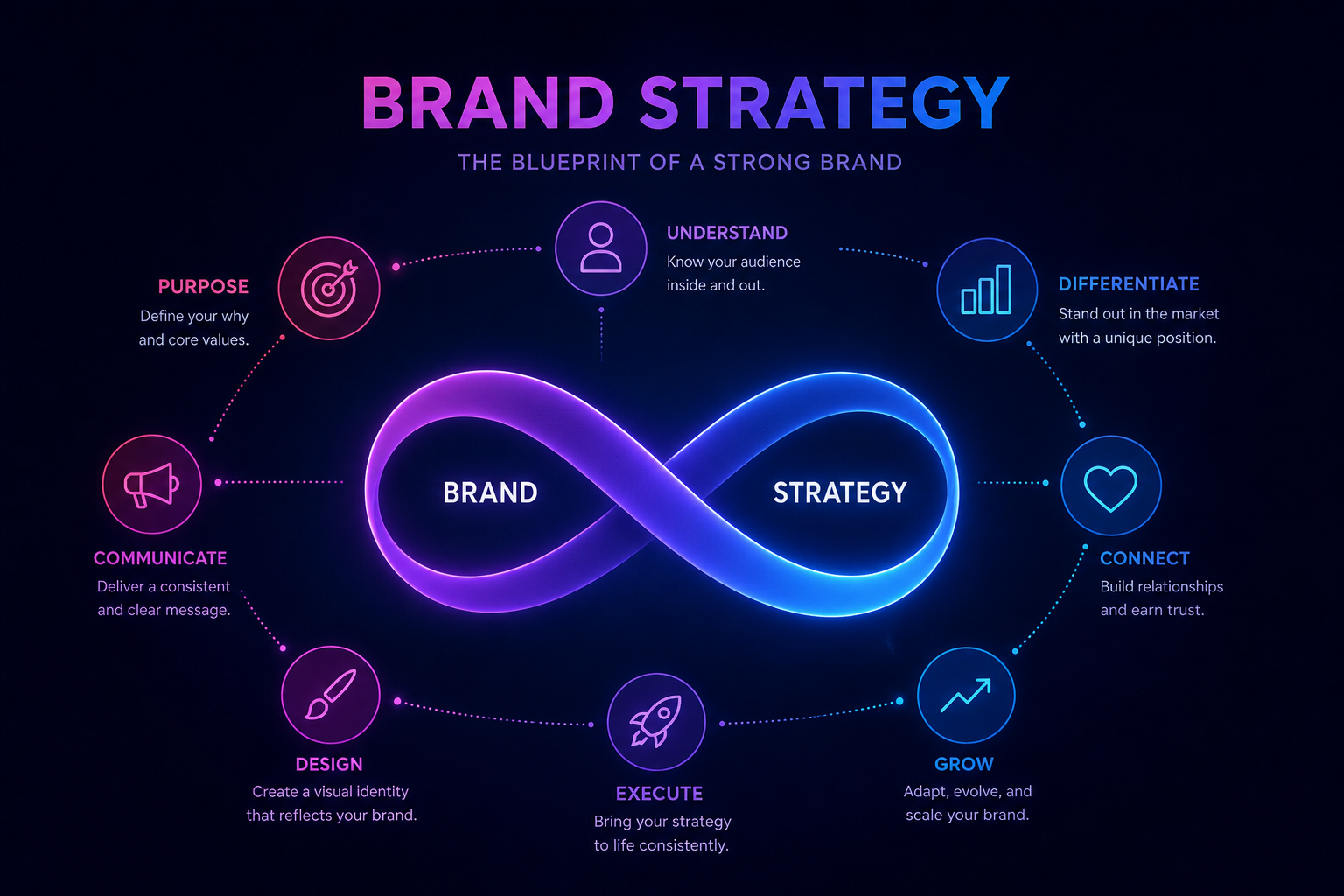
What is a brand strategy? And why does every company need one?
-
Introduction
In today's competitive business landscape, success is no longer determined solely by the quality of a product or service. Instead, it largely depends on how customers perceive your brand. A well-defined Brand Strategy enables businesses to build trust, differentiate themselves from competitors, and create meaningful, long-lasting relationships with their target audience. Whether you're launching a startup or growing an established company, a strong brand strategy serves as the foundation for sustainable success. In this article, we'll explore what Brand Strategy is, why it matters, its key components, and the essential steps to create a powerful brand that stands out in today's marketplace.
- What Is Brand Strategy?
Brand Strategy is a long-term plan that defines how a business wants to be perceived by its customers. It outlines the purpose, values, mission, personality, messaging, visual identity, and overall customer experience that shape the brand's image in the market.
A Brand Strategy goes beyond creating a logo or choosing brand colors. It serves as the foundation for every interaction between a business and its audience, helping to build trust, strengthen customer loyalty, differentiate the brand from competitors, and support long-term business growth.
- Modern brands rely heavily on digital channels to reach their audiences and build strong customer relationships. Understanding Digital Marketing and its different types helps businesses create more effective strategies and achieve better results https://gravity-media.net/wp-admin/post.php?post=1190&action=edit
In simple terms, Brand Strategy is the roadmap that guides how a company communicates its value, builds meaningful relationships with customers, and creates a consistent, memorable brand experience across all channels. Digital Marketing
To learn more about the fundamentals of Brand Strategy and why it matters, explore this comprehensive guide from HubSpot HubSpot
- Why Is Brand Strategy Important?
Brand Strategy is one of the most important factors behind a company's long-term success. It helps businesses build a clear and recognizable identity that reflects their mission, values, and goals, making them stand out in a competitive market. A strong brand strategy also builds customer trust, increases brand recognition, and fosters long-term customer loyalty.
In addition, Brand Strategy aligns all marketing and communication efforts, enhances the customer experience, and supports better business decisions. This consistency strengthens the brand's reputation, improves marketing performance, drives higher sales, and creates sustainable business growth. The clearer and more consistent your brand strategy is, the stronger your relationship with your target audience will become.
- Core Elements of a Brand Strategy
A successful Brand Strategy is built on several essential elements that work together to create a strong and recognizable brand identity. These key components include
Learn more about the essential components of a successful Brand Strategy in this in-depth guide from HubSpot HubSpot Components
1. Brand Purpose
Defines the reason why the business exists beyond making a profit. It reflects the value the company aims to deliver to its customers and society.
2. Brand Mission
Explains what the company does, how it serves its customers, and the actions it takes to achieve its purpose.
3. Brand Vision
Describes the company's long-term goals and the future it aspires to create.
4. Brand Values
Represents the core principles that guide the company's decisions and behavior, such as integrity, innovation, quality, transparency, and customer focus.
5. Target Audience
Identifies the specific group of customers the business wants to reach. Understanding their needs, interests, and purchasing behavior helps create more effective marketing strategies.
6. Brand Positioning
Defines how the brand wants to be perceived in the market and what makes it different from competitors.
7. Brand Personality
Describes the human characteristics associated with the brand, such as professional, friendly, innovative, luxurious, or bold, helping to build emotional connections with customers.
8. Brand Voice
Refers to the consistent tone and style of communication the brand uses across all platforms, whether formal, conversational, educational, or inspirational.
9. Visual Identity
Includes all the visual elements that represent the brand, such as the logo, color palette, typography, imagery, and overall design style, creating a consistent and memorable appearance.
10. Customer Experience
Covers every interaction customers have with the brand, from visiting the website and purchasing products to customer support and after-sales service. A positive customer experience strengthens trust and encourages long-term loyalty.
- Steps to Build a Successful Brand Strategy
Building a successful Brand Strategy requires careful planning, a deep understanding of your market, and a clear vision for your business. Here are the essential steps to create a strong and effective brand strategy:
If you'd like to learn how to build a successful Brand Strategy, explore this detailed guide from Shopify.
1. Define Your Brand Purpose
Start by identifying why your brand exists beyond making a profit. Clearly define the value you want to provide to your customers and the impact you aim to make.
2. Research Your Market and Competitors
Analyze your industry, identify market trends, and study your competitors to understand their strengths, weaknesses, and opportunities that can help differentiate your brand.
3. Identify Your Target Audience
Understand who your ideal customers are by researching their demographics, interests, needs, challenges, and purchasing behaviors. This helps you create more relevant products and marketing messages.
4. Define Your Brand Positioning
Determine what makes your brand unique and why customers should choose your products or services over your competitors.
5. Create a Strong Visual Identity
Develop a professional logo, choose a consistent color palette, typography, and design style that reflect your brand's personality and values.
6. Establish Your Brand Personality and Voice
Define your brand's personality and maintain a consistent tone of voice across all communication channels, whether it's professional, friendly, educational, or inspirational.
7. Deliver an Exceptional Customer Experience
Ensure that every interaction customers have with your brand—from visiting your website to after-sales support—is positive, consistent, and memorable.
8. Maintain Brand Consistency
Apply your brand identity, messaging, and values consistently across your website, social media platforms, advertising campaigns, email marketing, and customer service to build trust and recognition.
9. Monitor Performance and Improve Your Strategy
Regularly evaluate your brand's performance by analyzing customer feedback, tracking key performance metrics, and adjusting your strategy to meet changing market trends and customer expectations.
- Brand Strategy vs. Visual Identity
Many people confuse Brand Strategy with Visual Identity, but they serve different purposes. Brand Strategy is the long-term plan that defines a company's mission, vision, values, personality, positioning, and how it communicates with its audience. Visual Identity, on the other hand, is one part of that strategy and focuses on the visual elements that represent the brand and make it recognizable.
Brand Strategy Visual Identity A long-term plan that defines the brand's identity and direction. The visual representation of the brand. Focuses on the brand's mission, vision, values, and positioning. Focuses on the logo, colors, typography, and design elements. Aims to build a strong perception in customers' minds. Aims to improve brand recognition through visual consistency. Influences all marketing and business decisions. Supports branding through visual communication. Includes customer experience and brand messaging. Focuses on the brand's appearance and design assets.In short, Brand Strategy defines who your business is and what it stands for, while Visual Identity expresses that strategy through visual design and branding elements.
To better understand the relationship between Brand Strategy and Visual Identity, read Canva's complete guide Canva
- Brand Strategy vs. Marketing Strategy
Although Brand Strategy and Marketing Strategy work together to support business success, they serve different purposes. Brand Strategy focuses on building a company's identity, reputation, and long-term relationship with its customers, while Marketing Strategy focuses on promoting products or services, attracting customers, and driving sales through specific marketing activities and campaigns.
Brand Strategy Marketing Strategy Defines the brand's identity, mission, and values. Defines how products or services will be promoted. Focuses on building trust and long-term customer relationships. Focuses on attracting customers and increasing sales. Long-term in nature. Can be short-term or campaign-based. Aims to build a strong brand image and reputation. Aims to achieve specific marketing goals and business growth. Includes brand identity, messaging, personality, and positioning. Includes advertising, SEO, social media marketing, email marketing, and promotional campaigns. Guides all brand-related business decisions. Focuses on executing marketing tactics and campaigns.- Common Brand Strategy Mistakes to Avoid
Even businesses with excellent products or services can struggle if they make mistakes in their Brand Strategy. Avoiding these common mistakes helps build a strong brand, earn customer trust, and achieve sustainable growth.
1. Lack of a Clear Brand Identity
Many businesses fail to define their mission, vision, and core values, making it difficult for customers to understand what the brand stands for.
2. Ignoring the Target Audience
Without understanding your customers' needs, interests, and behaviors, your marketing messages may fail to connect with the right audience.
3. Copying Competitors
Imitating competitors instead of creating a unique identity makes it difficult for customers to recognize and remember your brand.
4. Inconsistent Branding
Using different logos, colors, messaging, or tone of voice across platforms creates confusion and weakens brand recognition.
5. Focusing Only on Visual Identity
A professional logo and attractive design are important, but they are only one part of a successful Brand Strategy. A strong strategy also includes positioning, messaging, and customer experience.
6. Neglecting Customer Experience
Poor customer service, slow response times, or inconsistent experiences can damage your brand's reputation and reduce customer loyalty.
7. Failing to Update the Strategy
Markets and customer expectations change over time. Businesses that never review or improve their Brand Strategy risk falling behind competitors.
8. Unclear Brand Messaging
Inconsistent or confusing communication makes it difficult for customers to understand your brand's value, purpose, and unique selling proposition.
- Examples of Brands with Successful Strategies
Some of the world's most successful companies are excellent examples of how a well-defined Brand Strategy can create a strong identity, build customer trust, and achieve long-term business success. Here are a few notable examples:
1. Apple
Apple has built its brand around innovation, simplicity, and premium quality. Its consistent design, user experience, and customer-focused approach have made it one of the most valuable brands in the world.
2. Nike
Nike has created a powerful brand by inspiring people through sports, determination, and achievement. Its iconic slogan, "Just Do It," and emotionally driven marketing campaigns have helped build strong customer loyalty.
3. Coca-Cola
Coca-Cola focuses on promoting happiness, togetherness, and memorable experiences. Its consistent messaging and emotional storytelling have made it one of the most recognizable brands globally.
4. Airbnb
Airbnb has differentiated itself by emphasizing belonging and authentic travel experiences. Rather than simply offering accommodation, it encourages travelers to feel at home wherever they go.
5. Starbucks
Starbucks has built its brand around delivering a premium customer experience. Beyond serving coffee, it creates a welcoming atmosphere and consistent service that encourage customer loyalty and repeat visits.
- Key Benefits of a Strong Brand Strategy
Investing in a strong Brand Strategy is one of the smartest decisions a business can make. It helps create a recognizable brand, strengthen customer relationships, and achieve sustainable growth. Here are some of the key benefits:
1. Builds Customer Trust
A strong brand strategy increases credibility and makes customers more confident in choosing your products or services.
2. Increases Brand Awareness
A clear and consistent brand identity makes your business more recognizable and memorable in a competitive market.
3. Strengthens Customer Loyalty
Customers are more likely to remain loyal to brands that consistently deliver value and align with their expectations and beliefs.
4. Differentiates Your Business from Competitors
A well-defined brand strategy highlights your unique value proposition, helping your business stand out in the marketplace.
5. Improves Marketing Performance
A consistent brand message makes marketing campaigns more effective, resulting in better engagement and higher conversion rates.
6. Increases Brand Value
Strong brands have greater market value, attract more customers, and are often more appealing to investors and business partners
Affiliate Marketing Affiliate Marketing
7. Supports Sustainable Business Growth
A solid brand strategy provides a strong foundation for expanding into new markets and achieving long-term success.
8. Enhances Customer Experience
A consistent brand experience across all customer touchpoints increases satisfaction, encourages repeat business, and builds lasting relationships.
- The Role of Brand Strategy in Digital Marketing
Brand Strategy plays a crucial role in the success of Digital Marketing efforts because it provides the direction, identity, and messaging framework that guide all digital campaigns and content. When a brand has a clear strategy, it becomes easier to create consistent communication that attracts audiences and builds strong customer relationships.
- Modern brands rely heavily on digital channels to reach their audiences and build strong customer relationships. Understanding Digital Marketing and its different types helps businesses create more effective strategies and achieve better results Digital Marketing
The main ways Brand Strategy impacts Digital Marketing include:
1. Improves Digital Content Quality
Brand Strategy defines the brand's tone of voice, messaging style, and content direction, helping businesses create more relevant and engaging content.
2. Creates Consistency Across Digital Channels
A strong strategy ensures that the brand appears consistently across:
- Websites.
- Social media platforms.
- Digital advertising.
- Email marketing.
This makes the brand easier for customers to recognize and remember.
3. Builds Audience Trust
Consistent messaging and digital experiences increase credibility and help customers develop greater trust in the brand.
4. Improves Advertising Campaign Performance
Brand Strategy helps businesses identify the right audience, create more effective messages, and improve campaign results while reducing customer acquisition costs.
- Performance Marketing Performance Marketing
5. Supports Search Engine Optimization (SEO)
A strong brand strategy helps create valuable and trustworthy content, improving search visibility and attracting more organic traffic.
6. Increases Social Media Engagement
A clear brand personality and communication style make it easier to build online communities and encourage audience interaction.
7. Increases Conversion Rates and Sales
When customers understand a brand's value and trust its message, they are more likely to make purchasing decisions, leading to higher conversion rates.
-
Best Practices for a Successful Brand Strategy
Building a Strong Brand Strategy requires following proven practices that help create a clear identity, strengthen customer trust, and establish a powerful market position. The most important practices include:
1. Understand Your Target Audience Deeply
Research your customers' needs, challenges, interests, and buying behaviors to create products and messages that truly connect with them.
2. Define a Clear Brand Identity
Establish a clear brand mission, vision, values, and personality so customers understand what your brand represents.
3. Focus on Differentiation
Identify what makes your brand unique and highlight your value proposition instead of simply copying competitors.
4. Maintain Consistency Across All Channels
Ensure that your brand identity, messaging, and visual style remain consistent across your website, social media, advertising, and customer interactions.
5. Build Emotional Connections with Customers
Successful brands do more than sell products; they create emotional relationships through storytelling, shared values, and memorable experiences.
- The Creator Economy has also become an important part of modern brand strategies, allowing businesses to collaborate with creators and connect with audiences in a more authentic way Creator Economy
6. Deliver an Exceptional Customer Experience
Make every interaction with your brand positive and consistent, from marketing and purchasing to customer support and after-sales service.
7. Create Content That Reflects Your Brand Personality
Develop valuable and consistent content that communicates your brand values and builds trust with your audience.
8. Measure Brand Performance Regularly
Track important metrics such as brand awareness, customer satisfaction, engagement, and loyalty to evaluate and improve your strategy.
9. Adapt to Market Changes
Regularly review and update your Brand Strategy to respond to market trends and changing customer expectations while maintaining your brand's core identity.
- Future Trends in Brand Strategy
With rapid technological advancements and changing customer behaviors, Brand Strategy continues to evolve to meet new market demands. Successful brands are no longer focused only on selling products or services; they are increasingly focused on creating meaningful experiences and building long-term relationships with customers.
The key trends shaping the future of Brand Strategy include:
1. The Rise of Artificial Intelligence (AI)
Artificial Intelligence will play a major role in brand development by helping businesses analyze customer data, understand behaviors, and create more personalized marketing experiences.
2. Greater Focus on Personalization
Customers will increasingly expect personalized experiences and messages that match their needs and preferences. Brands that deliver customized experiences will have stronger customer loyalty.
3. Building Digital Communities
Brands will focus more on creating communities around their products, values, and missions rather than relying only on sales, strengthening customer relationships.
4. Growth of User-Generated Content (UGC)
Brands will increasingly rely on customer-generated content because it builds trust, authenticity, and stronger connections with audiences.
ما هو UGC (User Generated Content)? UGC
5. Increased Focus on Sustainability and Social Responsibility
Customers are becoming more aware of environmental and social issues, making sustainability and responsible business practices important parts of future brand strategies.
6. Enhancing Omnichannel Customer Experience
Brands will focus on creating seamless and consistent experiences across all customer touchpoints, both digital and traditional.
7. Data-Driven Decision Making
Advanced analytics and customer data will help businesses better understand their audiences, measure brand performance, and make more accurate strategic decisions.
- Conclusion
In today's competitive business world, Brand Strategy has become an essential factor for any company seeking to build a strong and sustainable market presence. It is not limited to creating an attractive logo or choosing specific colors; it involves building a complete brand identity that defines the company's mission, values, and communication with customers.
A well-developed brand strategy helps businesses build customer trust, differentiate themselves from competitors, create long-term loyalty, and improve their overall marketing and digital efforts. Investing in a strong brand also enables companies to adapt to market changes and deliver better customer experiences.
Ultimately, successful brands are not only those that sell products or services, but those that create meaningful relationships with their audiences and leave a lasting positive impact. Building a strong Brand Strategy is a long-term investment that supports sustainable growth and future success.